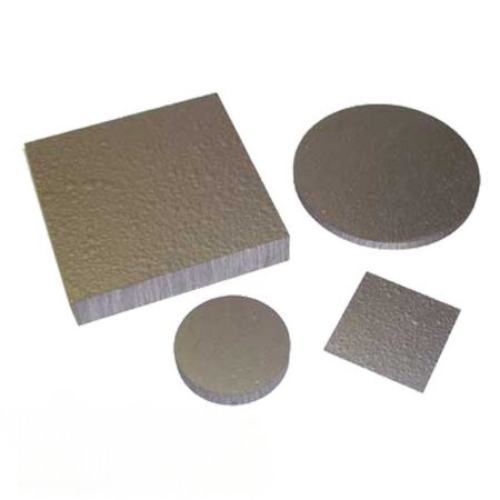
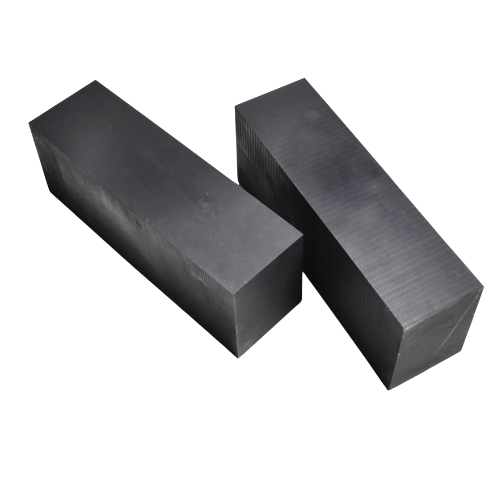
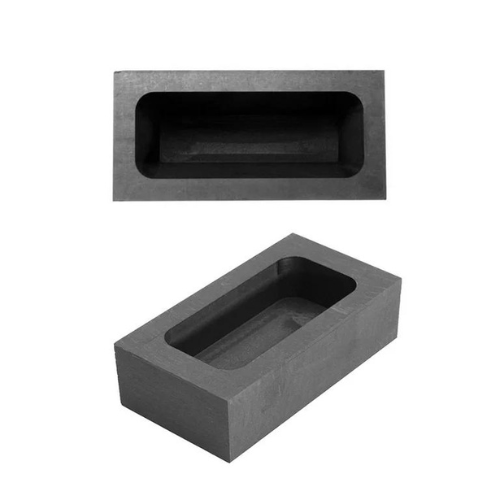
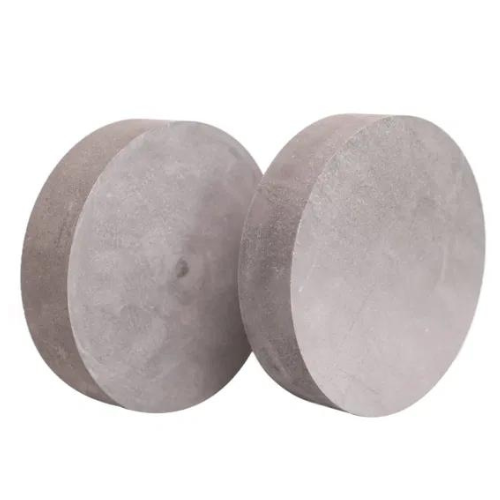
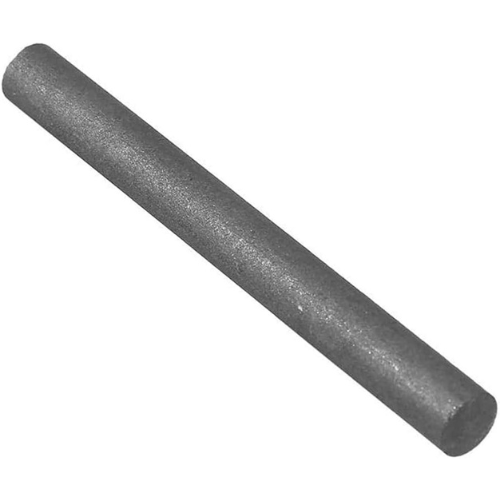
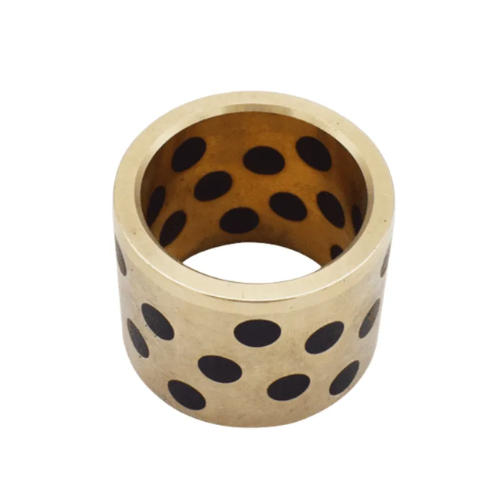
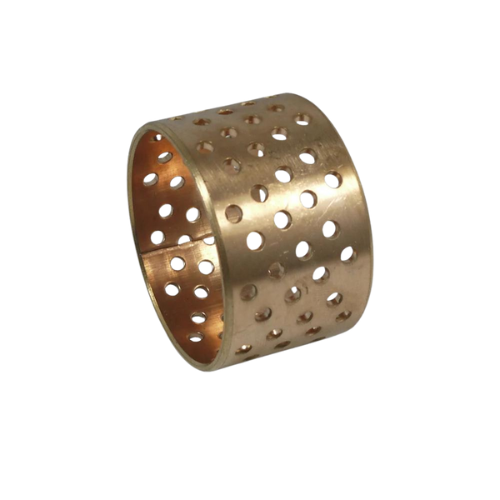
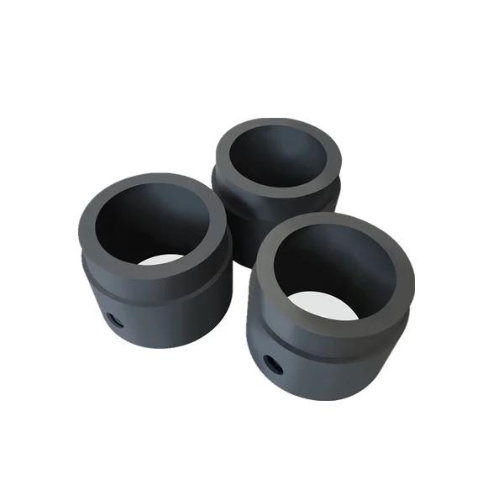
Graphite Electrical Parts and Bushing

Graphite Material

What is Graphite Material?

Graphite is a carbon allotrope in crystalline form with a lattice structure that is hexagonal. Occurring naturally, it constitutes graphene layers and under typical conditions makes the most stable carbon form. Diamond is formed by subjecting graphite to elevated temperature and pressure.

Types of Synthetic Graphite

The process conditions for producing synthetic graphite can be adjusted. It is therefore possible to achieve different forms or types of synthetic graphite. Some commonly produced synthetic graphite materials include:

Pyrolytic Graphite

Pyrolytic graphite is produced through chemical vapor deposition. This process involves the deposition of carbon atoms onto a substrate at elevated temperatures under a hydrocarbon gas environment. This results in the formation of a highly oriented and crystalline graphite. Graphite produced via the chemical vapor deposition process has very few impurities. Pyrolytic graphite is anisotropic and exhibits exceptional thermal conductivity laterally. It also has a low coefficient of thermal expansion useful in offering dimensional stability over a wide temperature range. Top of Form

SEND US A MESSAGE

    CONTACT INFORMATION

    Peshawar Road, Sangjani, Islamabad, Pakistan

    +92 370 5833 304

    info@honleyengineering.com
    admin@honleyengineering.com

    Do you have questions about how we can help your company? Send us an email and we’ll get in touch shortly.

    Isostatic Graphite

    This synthetic graphite is formed by cold compacting the raw materials in shaped blocks in an isostatic press. Here, there’s a uniform application of pressure from all directions, resulting in uniform density and material properties. Among synthetic graphite, isostatic graphite has the smallest grain sizes. Fine graphite powder in a flexible mold is subjected to high pressure in an isostatic press from a specialized liquid. Isostatic graphite is isotropic with consistent properties throughout and is capable of high-purity graphite. The graphite material has a homogeneous microstructure, with precise dimensional control and determinable performance. Isostatic graphite finds use in industrial sintering, high-temperature applications and the production of semiconductor components.

    SEND US A MESSAGE

      CONTACT INFORMATION

      Peshawar Road, Sangjani, Islamabad, Pakistan

      +92 370 5833 304

      info@honleyengineering.com
      admin@honleyengineering.com

      Do you have questions about how we can help your company? Send us an email and we’ll get in touch shortly.

      Molded Graphite

      Molded graphite is produced through a molding process where graphite particles are compressed in a mold. After placing the graphite powder in a mold of the desired shape, pressure is applied compacting the powder. A heating process of the mold follows sintering the graphite particles into a solid. Molded graphite can have directional properties but allow for the production of graphite components in different shapes.  Compared to isostatic pressing, molding graphite is more cost-effective given the ability to create custom shapes and sizes. Molded graphite finds use in the foundry industry manufacturing components like crucibles. It is also employed in continuous casting applications for producing metal parts.

      SEND US A MESSAGE

        CONTACT INFORMATION

        Peshawar Road, Sangjani, Islamabad, Pakistan

        +92 370 5833 304

        info@honleyengineering.com
        admin@honleyengineering.com

        Do you have questions about how we can help your company? Send us an email and we’ll get in touch shortly.

        Vibrated Graphite

        Vibrated graphite is produced through vibration molding which involves using a vibrating mechanism to compact and shape graphite particles. Graphite particles in powder form are subjected to vibrations in a mold causing the graphite particles to compact. This graphite form may exhibit directional properties depending on molding orientation. Additionally, it may feature varying densities. Vibration-molded graphite is useful in continuous casting applications and is appreciated for its versatility in shaping.

        SEND US A MESSAGE

          CONTACT INFORMATION

          Peshawar Road, Sangjani, Islamabad, Pakistan

          +92 370 5833 304

          info@honleyengineering.com
          admin@honleyengineering.com

          Do you have questions about how we can help your company? Send us an email and we’ll get in touch shortly.

          Extruded Graphite

          This type of synthetic graphite is produced through an extrusion process. Here, the graphite powder and binder mix is forced through a die creating a continuous profile. Thereafter, the material is heat-treated to eliminate the binder and sinter the graphite particles into a solid and cohesive lump. The die is usually shaped in the desired cross-section and the product is cut into preferred lengths. Extruded graphite has moderate density and may exhibit anisotropic properties. Furthermore, with the extrusion process, it is possible to produce uniform and continuous profiles.

          SEND US A MESSAGE

            CONTACT INFORMATION

            Peshawar Road, Sangjani, Islamabad, Pakistan

            +92 370 5833 304

            info@honleyengineering.com
            admin@honleyengineering.com

            Do you have questions about how we can help your company? Send us an email and we’ll get in touch shortly.

            Properties of Graphite Material

            Graphite as a carbon element possesses several unique properties that influence its use in various applications.

            Mechanical Properties

            Even though its hardness is not comparable to that of diamond, graphite exhibits relatively moderate mechanical strength. Its mechanical strength is determined by its lattice structure and the weak interlayer forces.

            Given these weak forces, graphite exhibits some flexibility which allows limited deformation under stress capable of withstanding some mechanical loads. Graphite’s mechanical properties vary with the direction of force application, easily shearing laterally but resistant to perpendicular stress.

            Thermal Properties

            Graphite has high thermal conductivity thanks to its structure facilitating effective heat transfer along the planar axis. This carbon form also has a high melting point exceeding 3,000 °C allowing high heat applications like in furnaces.

            Graphite changes state from a solid to a gas deforming in an atmosphere of inert gas at over 2450 °C. Sublimation can also occur at 3750 °C in the absence of oxygen. The low specific heat capacity of graphite allows it to quickly respond to temperature changes.

            Graphite also undergoes minimal expansion and contraction with these temperature changes resulting from their low coefficient of expansion. This is especially useful where dimensional stability is key. The thermal stability displayed by graphite in reducing or high-temperature environments is also formidable.

            Graphite displays anisotropic thermal conductivity with effective transfer along rather than perpendicular to the lattice. When graphite is subjected to temperature changes, it responds without fracturing thanks to its resistance to thermal shock.

            Electrical Properties

            Graphite features delocalized electrons within its lattice structure that allows for electricity conduction. The carbon atoms in graphite constitute four valence electrons with only three of those capable of bonding. The free fourth electron thus makes conductivity possible.

            Chemical Properties

            Graphite is highly chemical resistant displaying non-reactivity with most chemicals. This chemical inertness makes it ideal where chemical stability is desired or in corrosive environments.

            The natural lubricity of graphite allows use in friction reduction where liquid lubricants are impractical, as a solid lubricant. This is thanks to the weakly bonded carbon layers that easily slide over each other.

            Manufacturing Synthetic Graphite Materials

            In the process of manufacturing synthetic graphite elevated temperature processes are involved. Additionally, precise parameter control is exercised to achieve desired purity levels and material properties.

            Synthetic graphite production utilizes coke or coal as the primary raw material alongside pitch binder. There are two commonly used manufacturing processes: the Acheson process and the high-temperature treatment of compounds of carbon.

            Acheson Process

            In this process, finely ground coke and graphite are subjected to heating in an electric resistance furnace at over 2450 °C. A chemical reaction results which transforms some of the carbon into graphite alongside silicon carbide. The graphite is cooled and thereafter crushed to achieve the desired size.

            High-Temperature Treatment

            Carbon compounds like coke or coal are subjected to high temperatures ranging between 2400-3000 °C. The process, referred to as pyrolysis transforms the carbon contents into graphite. A cooling and crushing procedure follows to achieve the desired [article consistency.

            Graphitization

            In this process, the carbon material is subjected to elevated temperatures exceeding 2500 °C under controlled conditions. The result is the rearrangement of the carbon atoms into a hexagonal lattice structure.

            Treatments

            Treatment of the formed graphite can follow to determine the purity levels or modify the particle’s surface properties. Graphite can also be interlaced with other compounds to alter the material’s overall properties.

            After producing synthetic graphite, it can be formed by various means such as molding, extrusion, and machining.

            Graphite Machining

            The process of machining graphite involves shaping and finishing the graphite material to achieve the desired finish and appearance. Different tools are used such as diamond or carbide tools. When machining graphite consider its brittleness and anisotropy.

            Milling Graphite

            When milling graphite, you remove material from the workpiece using rotary cutters like milling machines to achieve certain shapes. Carbide tooling in such machines is used for their wear resistance and hardness.

            To achieve efficient material removal, high-speed machining is employed. Since graphite produces fine particles, it is essential to practice dust control to ensure a smooth process and reduce health hazards.

            Turning Graphite

            When turning a graphite workpiece, it is rotated against a cutting tool usually to create cylindrical profiles. Turning is a subtractive manufacturing process since it entails material removal. CNC turning machines find common use in turning graphite offering high precision and automation.

            The cutting tools in a turning machine used for graphite possess high hardness and wear resistance. These include diamond-coated tools and carbide. Cutting speed, feed rate, and depth of cut are some of the aspects to consider when turning graphite.

            Since graphite is brittle, minimizing vibration and providing adequate workpiece support is necessary to prevent breakage of the tool and chipping. Turning graphite can be utilized in making bearings and graphite seals.

            Grinding Graphite

            Graphite grinding utilizes abrasive tools to remove material to attain a desired surface finish and/or dimensions. It is commonly applied as a finishing operation utilizing grinding wheels with abrasive particles.

            Commonly used abrasives are cubic boron nitride and diamond. When grinding graphite, precision is essential to achieve fine surface finishes and tight tolerances. The use of coolants is not necessary due to the risk of contamination.

            Drilling Graphite

            The creation of holes in graphite workpieces is made possible by drilling using drill bits. These drills can be under computer numerical control or manual, the former offering higher precision. When drilling graphite, you need to secure the workpiece to prevent movement during the drilling operation.

            There are different drilling methods such as twist drilling, peck drilling, center drilling and counter boring and sinking. When drilling you consider aspects like the depth and size of the hole. These will be influenced by the drill bit and speed.


            Graphite Material Uses

            Thanks to the remarkable properties of graphite including lubricity, electrical conductivity and thermal tolerance, it finds several uses across industries. Some of these uses are captured as follows:

            Graphite in Nuclear Industry

            A major application of graphite in the nuclear industry is its use in some reactors as a moderator material. In this role, it slows down neutron movement enabling the occurrence of sustained nuclear reactions.

            Casings for fuel channels in advanced gas-cooled reactors are fashioned from graphite. This material tolerates the high temperatures and irradiation conditions while also providing stability and mechanical support.

            Furthermore, graphite offers radiation shielding as it can attenuate radiation effects. This property allows its use in making personal protective equipment and also long-term storage of nuclear waste.

            Graphite in Metallurgy

            Graphite’s high-temperature stability and chemical inertness make its use as a refractory material in metallurgy ideal. A refractory material is essentially resistant to heat or chemical decomposition. Such a material, instead retains its physical properties and structure.

            Graphite can be used to make refractory bricks by itself or when mixed with magnesium. Such use is prominent in continuous steel casting and extends to making crucibles and molds used to contain molten metals.

            In continuous steel casting, graphite is combined alongside zirconia and alumina and zirconia to make nozzles, stopper rods and ladles. These help regulate molten steel flow while also safeguarding against oxidation.

            Graphite blocks are also utilized in the production of iron to line the blast furnace. Their high thermal resistance and low thermal expansion are some factors buttressing their use this way. They also find use in metallurgical furnaces as electrodes.

            Graphite in Chemical Industry

            The use of graphite in the chemical industry is down to its chemical inertness and thermal stability which makes it unaffected by even exothermic reactions. Graphite is utilized in making corrosion-resistant equipment used for chemical processes like reaction vessels used in laboratories.

            Piping systems in chemical plants utilize graphite pipes and fittings to transport corrosive liquids such as acids and basic solutions. Additionally, graphite material finds use in making chemical seals and gaskets for leakage prevention.

            The electrolysis of brine produces hydrogen, chlorine, and sodium hydroxide with graphite utilized for the electrodes. Other electrochemical processes like electroplating also utilize graphite electrodes. Furthermore, in reactions utilizing catalysts, graphite can act as support material.

            Graphite in the Electrical Industry

            There are many uses of graphite in the electrical industry with the material commonly used in battery electrodes e.g. lithium-ion batteries. Here, graphite is utilized as anode material. Graphite is also capable of electrical conductivity with low resistivity.

            Its electrical properties allow for its use in electric motors and generators to make brushes and contacts. Graphite brushes offer a conductive path between the rotor and stationary part which ensures there is no disruption in electrical flow.

            Also, the lubricity of graphite is essential in reducing friction thus preventing wear and smooth electrical conductivity. This is exemplified in sliding electrical contacts as observed in variable resistors, switches, and potentiometers.

            The high thermal tolerance of graphite allows for its use in heat management for electronic devices preventing overheating. Utilizing graphite material as a thermal interface material or as a heat sink aids electronic components in dissipating generated heat.

            Thermocouples used in high-temperature environments utilize graphite material as a protective material. The material’s chemical inertness shields the thermocouple from corrosive gases ensuring accurate temperature measurements.

            Graphite in Mechanical Applications

            Owing to graphite’s lubricating properties, it is utilized as a dry lubricant where liquid lubricants are unsuitable. For instance, graphite bearings can operate without requiring greasing. Graphite can also be used to augment thermal properties in composite materials used in automotive and aerospace fields.

            This material features piston rings and cylinder liners of high-performance engines owing to their friction reduction and excellent wear resistance. The machinability of graphite and temperature stability allows die and mold production for metal casting.

            Using Graphite in the Automotive and Aerospace Industry

            Vehicular and aircraft brake pads and linings utilize graphite material owing to superior frictional properties enhancing braking performance. Its high-temperature stability and chemical resistance allow for application in automotive engine gaskets and seals.

            When developing composite materials for aircraft parts and components like fuselage, graphite is utilized for its thermal qualities and chemical resistance. This material also features aircraft rocket nozzles and thrust chambers for its thermal stability and corrosion resistance.

            Customized Graphite Solution

            We offer one-stop customized graphite solution to meet the all industry requirements. Choose us to be your trusted supplier!

            SEND US A MESSAGE

              CONTACT INFORMATION

              Peshawar Road, Sangjani, Islamabad, Pakistan

              +92 370 5833 304

              info@honleyengineering.com
              admin@honleyengineering.com

              Do you have questions about how we can help your company? Send us an email and we’ll get in touch shortly.

              Graphite Bushings

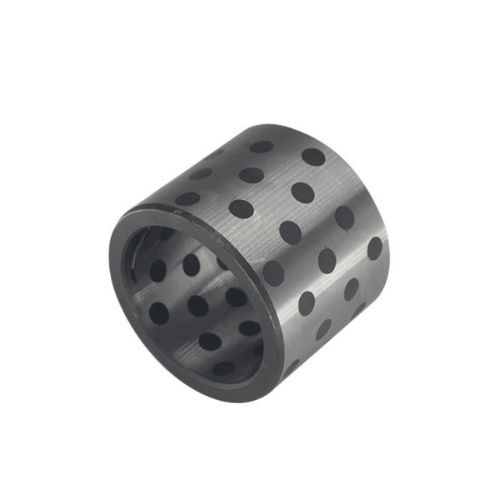
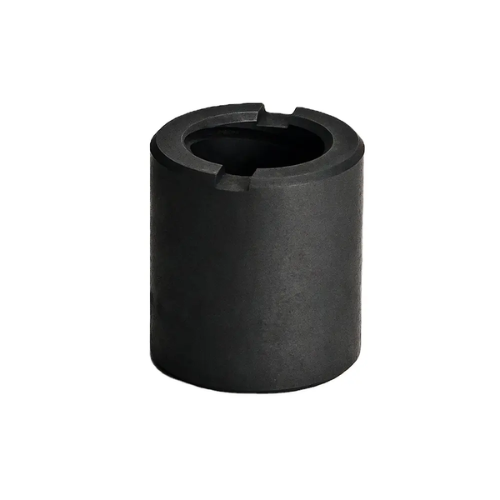
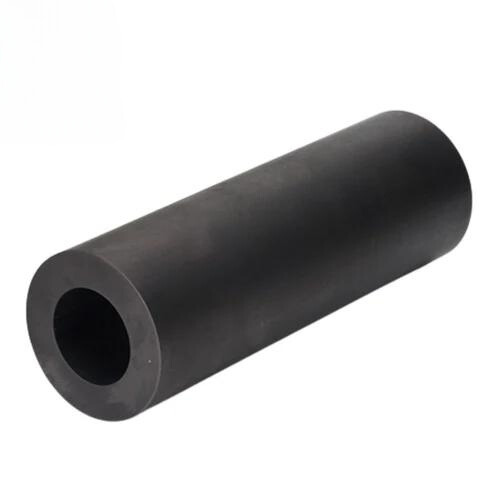
              Graphite bushings are vibration isolators or energy-damping components made from graphite materials. Graphite could be impregnated with other materials for better performance.

              East Carbon graphite bushes are designed to reduce noise or vibration between two interfacing surfaces. Additionally, they improve efficiency while reducing parts wear due to friction. For years now, graphite has remained a popular material in bush and bearing manufacturing due to superior performance and reliability.

              High-strength Bronze Graphite Bushings

              Resin Impregnated Graphite Carbon Bushings

              Automotive Graphite Self-lubricating Bushings Pad

              Good-wear Resistant Graphite Bushings

              Graphite Sleeve Carbon Bushings for Lubricating Factory

              Customized Graphite High-quality Bushing

              Graphite Bushing for Pump Seals Industry

              High Purity Isotropic Graphite Bushing

              How to make Graphite Bushings

              At Honley Engineering, we start choosing high-quality graphite material which we mix with special additives. The additives in graphite depend on where you intend to use the bushing.

              The mixture of graphite and other additives is heated and then extruded to form a specified profile. Usually, the graphite bush profile may vary in terms of wall profile, hollow interior depths, etc. At the same time, the graphite bushings impregnated with other additives such as resigns or linseed oil to smoothen the surface.

              After manufacturing Honley Engineering graphite bush, they are subjected to quality testing before packaging.

              Applications of Graphite Bushing

              Generally, graphite bushing improves efficiency, and reduces vibration and noise. Therefore, you can use a bushing made from graphite for any mechanical interface parts that experience rotary or linear motions.

              Machine Parts

              For mating machine parts, graphite bushes will eliminate possible vibrations, parts wear, and overheating. They will guarantee noiseless operation while improving efficiency. You can install these bushings on virtually all machines from motor systems, and gear to drilling systems.

              Alternative to Lubricating Oil or Grease

              There are certain applications where using lubricating oil or grease may cause contamination. Therefore, you need a graphite bush with self-lubricating capability to prevent possible friction. Additionally, bushings made from graphite can withstand very high temperatures.

              Other Industries

              Many industries such as electrical, pharmaceutical, mining, automotive, aerospace, food processing to petroleum industries use graphite bushes in many machine parts and components.

              CURABITUR ALIQUET QUAM POSUERE

              DO YOU LIKE THE THEME? SHARE WITH YOUR FRIENDS!

              Will be used in accordance with our Privacy Policy